articlesApril 19, 2026·8 min read

Peptides for Strength vs Mass: Which Goal Wins

IGF-1 for site-specific strength. GHRH+GHRP for systemic mass. Picking the right compound for powerlifting vs bodybuilding.

Peptides for Strength vs Mass

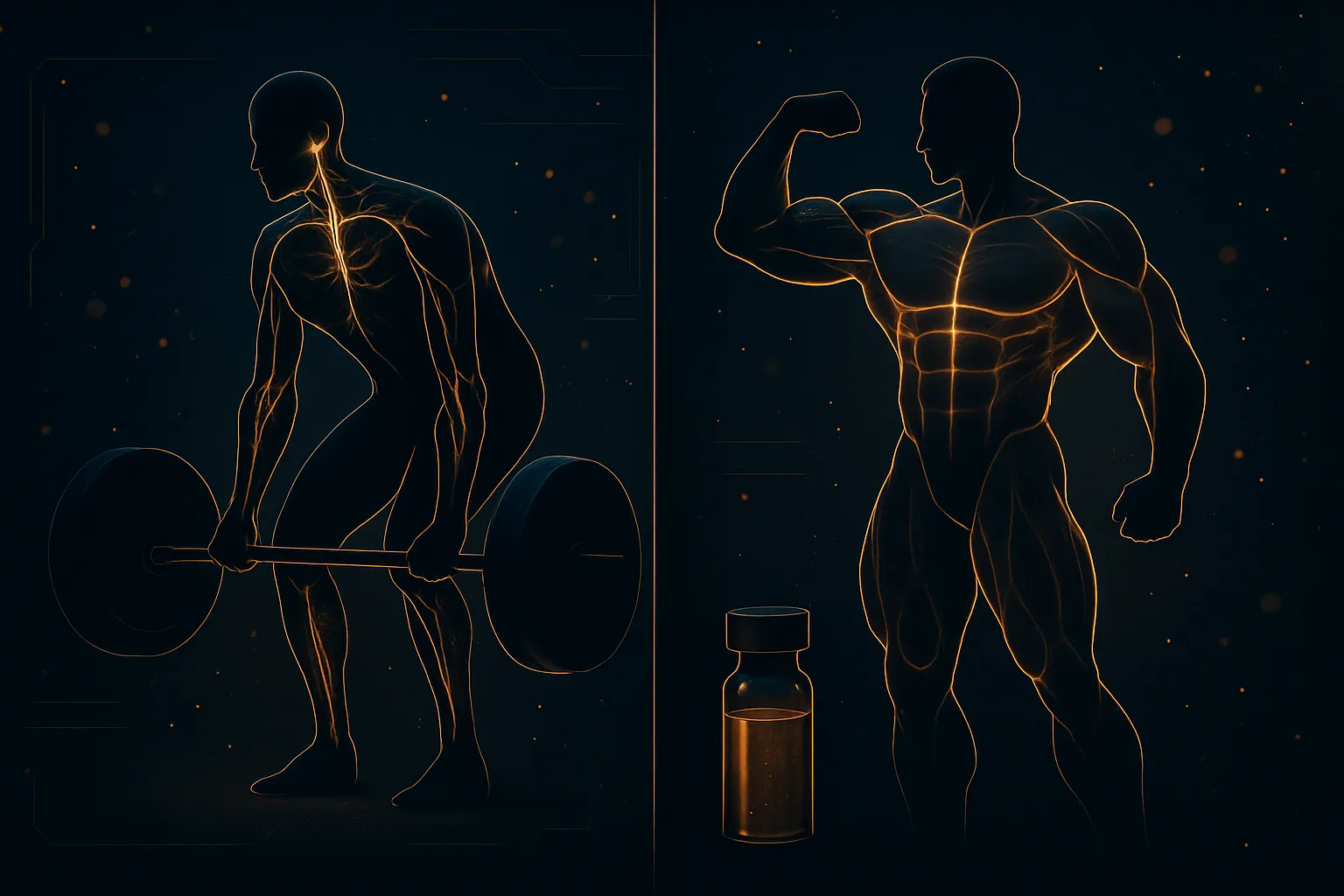
Strength and mass overlap, but the training goals diverge enough that the peptide stack should too. A powerlifter cutting weight for a meet needs site-specific hypertrophy, connective tissue protection, and neuromuscular efficiency — not systemic weight gain. A bodybuilder three months out needs the opposite: maximum lean mass, visceral fat loss, and body-composition shift.

This article separates peptides into the two tiers and tells you which stack fits which goal. The short answer: GHRH+GHRP stacks are the systemic mass base for both groups. IGF-1 LR3, follistatin-344, and BPC-157 tilt the emphasis toward strength. The final pick depends on whether "more lean mass" or "more force output per pound of body weight" is the primary target.

The Two Tiers

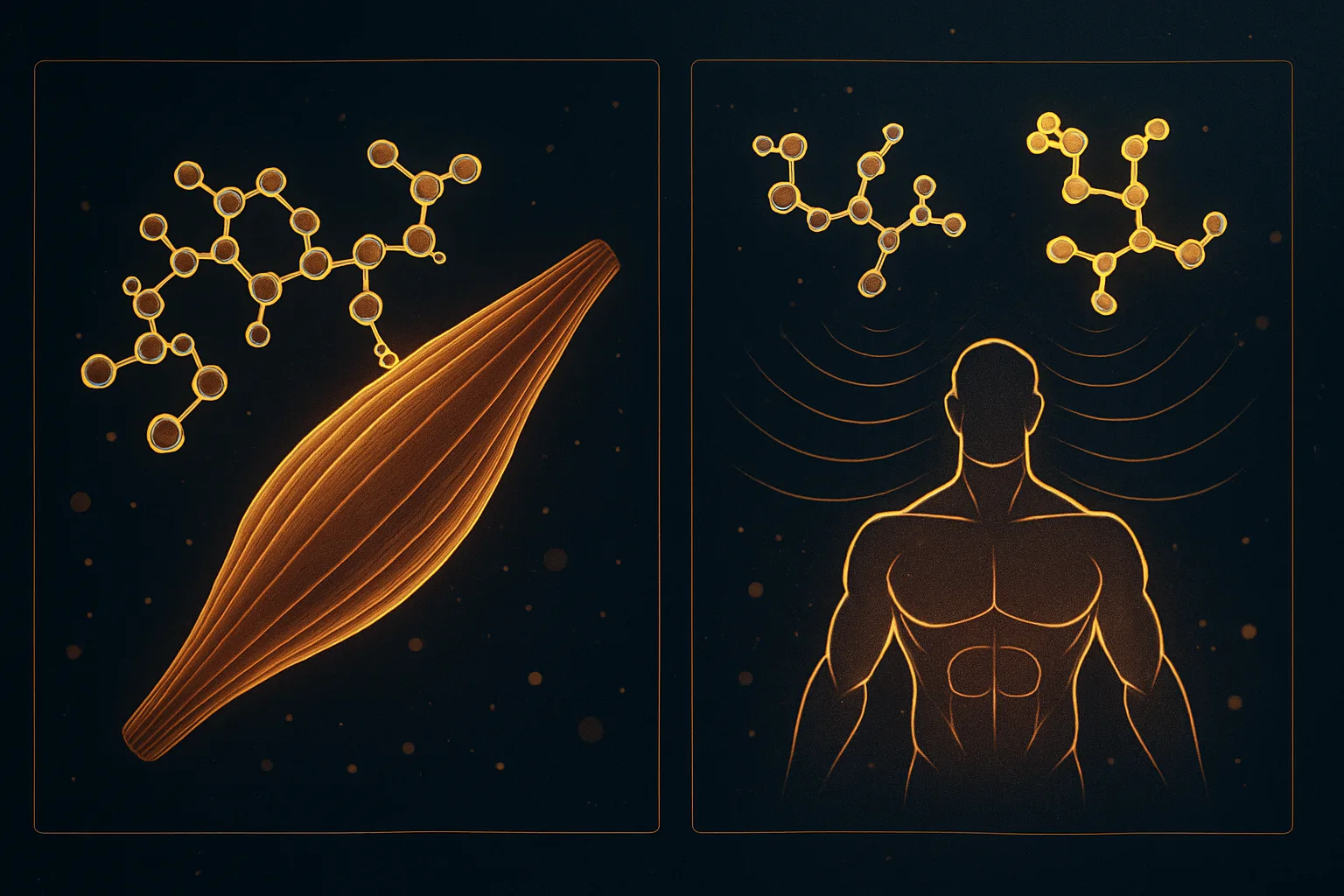
Systemic mass (bodybuilding-leaning): GHRH + GHRP stacks drive GH/IGF-1 pulses that signal whole-body anabolism. Lean mass accrual spreads across all trained muscles proportional to training stimulus.

Site-specific strength (powerlifting-leaning): direct IGF-1 activity, myostatin inhibition, connective tissue support. Effects concentrate where signaling is strongest.

Quick Comparison Table

Peptide Primary Effect Strength Tier Mass Tier
Tesamorelin + Ipamorelin GH/IGF-1 systemic Moderate High
CJC-1295 + Ipamorelin GH/IGF-1 systemic Moderate High
MK-677 GH/IGF-1 sustained Moderate Moderate
IGF-1 LR3 Direct IGF-1 receptor High (site-specific) Moderate
Follistatin-344 Myostatin inhibition High (experimental) Moderate
BPC-157 Connective tissue High (indirect) Low
TB-500 Systemic repair Moderate Low

Mass-Dominant Stacks (Bodybuilding)

The Standard Bodybuilding Stack

Tesamorelin + ipamorelin, 12-16 weeks, pre-bed fasted.

Tesamorelin's phase III data shows 15-18% visceral fat reduction and preserved or increased muscle cross-sectional area — the exact body-composition profile bodybuilding cuts chase. Ipamorelin's clean receptor profile (no cortisol, no prolactin — Raun et al., 1998) keeps the stack compatible with low-calorie phases.

Realistic cycle outcome: 3-5 lb lean mass gain + 5-8 lb fat loss over 12-16 weeks in a trained lifter.

Deep dive: Best Tesamorelin + Ipamorelin Vendors | Tesamorelin Results Timeline

Top Tesamorelin + Ipamorelin Vendors

Ranked by price, COA availability, and reputation

The Budget Bodybuilding Stack

CJC-1295 + ipamorelin, 12-16 weeks.

Same mechanism, smaller per-mg pulse, roughly half the cost. Realistic cycle outcome: 2-3 lb lean mass + 3-5 lb fat loss.

Deep dive: Best CJC-1295 + Ipamorelin Vendors

Top CJC-1295 + Ipamorelin Vendors

Ranked by price, COA availability, and reputation

MK-677 for No-Needle Mass

MK-677 oral, 12 weeks, pre-bed.

The Nass 2008 RCT showed 1.6 kg fat-free mass gain over 12 months in older adults — slower than injectables but cumulative. Fluid retention early in the cycle can mask real mass gain on the scale. HbA1c at weeks 8 and 12.

Deep dive: MK-677 Dosing Guide

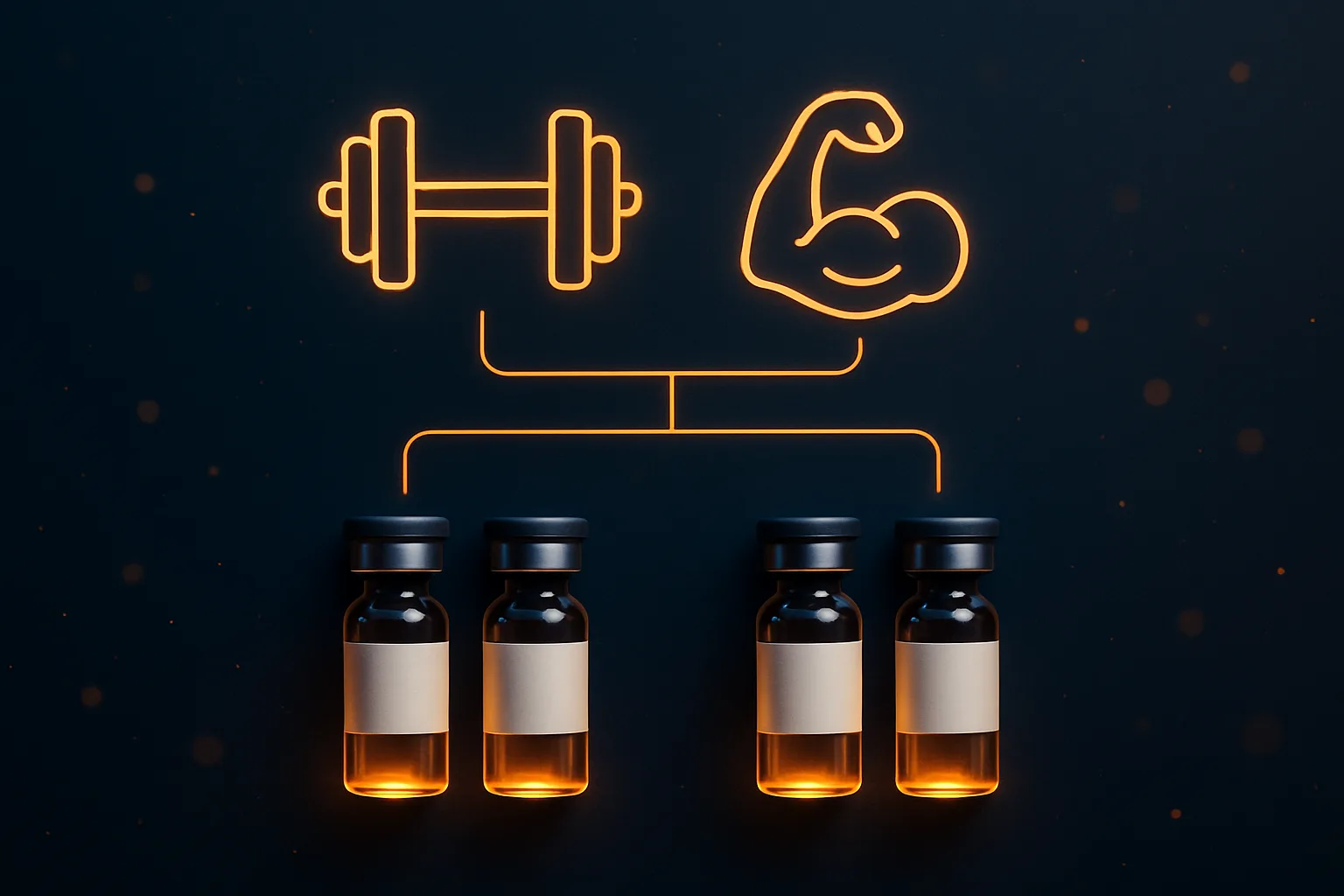
Strength vs Mass Stack Diagram

Strength-Dominant Stacks (Powerlifting/Strength Athletes)

IGF-1 LR3 for Site-Specific Hypertrophy

IGF-1 LR3, 4-6 weeks, post-workout, injected near target muscle.

IGF-1 LR3 is the strongest direct anabolic tool in the peptide world. It binds IGF-1 receptors with extended half-life compared to native IGF-1 and concentrates locally when injected near target tissue. Advanced strength users run short cycles (4-6 weeks maximum) focused on bringing up weak points.

Why it's in the strength tier: site-specific fiber hypertrophy supports force output in lagging muscles more precisely than systemic GH elevation. The lifter who can't lock out a deadlift doesn't need more fat loss — they need thicker spinal erectors, and IGF-1 LR3 injected intramuscularly in that area is one way to get there.

Trade-offs: hypoglycemia risk (cross-reactivity with insulin receptor at high doses), short cycle length required (receptor desensitization), mandatory bloodwork.

Protocol: 20-50 mcg post-workout, intramuscular near target muscle, 4-6 days per week. Fast-acting carbs on hand.

Deep dive: Best IGF-1 LR3 Vendors | IGF-1 LR3 Dosing Guide

Follistatin-344 for Myostatin Inhibition

Follistatin-344, 4 weeks, adjunct on top of a GHRH+GHRP base.

Follistatin binds and neutralizes myostatin — the protein that actively limits muscle growth. The Kota 2009 nonhuman primate study showed follistatin gene delivery produced durable muscle size and strength increases. Human data for peptide injection is limited.

Why it's in the strength tier: myostatin inhibition tends to produce disproportionate strength gains relative to mass gains in animal models. Double-muscled cattle (Belgian Blue) have the same pattern — much more muscle + more force, less fat.

Protocol: 100 mcg follistatin-344 daily for 4 weeks, subcutaneous, stacked on top of CJC+ipa or tesa+ipa. Experimental.

Deep dive: Follistatin-344 Dosing Guide

BPC-157 for Tendon and Connective Tissue

BPC-157, 4-8 weeks, subcutaneous or localized near injury.

BPC-157's strength angle isn't direct hypertrophy — it's connective tissue integrity. For powerlifters accumulating tendon/ligament wear from repeated heavy lifting, BPC-157 accelerates repair and supports higher training volumes before breakdown. A strength lifter who can train 4x/week instead of 3x/week because their elbows don't hurt will produce more strength gains over time than any direct anabolic peptide at the same dose.

Protocol: 250-500 mcg subcutaneous, twice daily, localized near any problem joint or tendon.

Deep dive: Best BPC-157 Vendors | BPC-157 Dosing Guide

TB-500 for Systemic Recovery

TB-500, 4-6 weeks, subcutaneous.

Pairs with BPC-157 for a broader repair stack. Good for powerlifters dealing with accumulated multi-site wear (shoulders, lower back, knees all cranky at once).

Deep dive: Best TB-500 Vendors | TB-500 Dosing Guide

The Hybrid Stacks (Both Goals)

Powerlifter Wanting Hypertrophy

  • Base: CJC-1295 + ipamorelin, 100 mcg + 100 mcg pre-bed, 12-16 weeks
  • Add weeks 8-12: IGF-1 LR3 30 mcg post-workout, 4 days/week
  • Add as needed: BPC-157 for sore joints

Expected outcome: 3-5 lb lean mass, modest strength gains, better training frequency.

Bodybuilder Wanting Strength

  • Base: Tesamorelin + ipamorelin, 2 mg + 100-200 mcg pre-bed, 12-16 weeks
  • Add weeks 4-8: Follistatin-344 100 mcg daily for 4 weeks
  • Continuous: BPC-157 250 mcg twice daily for training volume support

Expected outcome: 4-5 lb lean mass, visible physique transformation, meaningful strength signal on major lifts.

Strength vs Mass Decision Flowchart

Training Matches the Peptide

For mass (bodybuilding-leaning):

  • 4-6 sessions per week
  • 10-20 working sets per muscle group per week
  • Rep ranges of 6-15
  • Moderate intensity (65-85% 1RM)
  • Short-to-medium rest intervals (60-120 sec)

For strength (powerlifting-leaning):

  • 3-5 sessions per week
  • Fewer total sets, higher intensity
  • Rep ranges of 1-5
  • High intensity (85-95% 1RM)
  • Long rest intervals (3-5 min)

Running a mass-focused peptide stack with strength-focused training still works, but you'll leave gains on the table. Match the stack to the training.

Bloodwork

Both tiers: baseline IGF-1, fasting glucose, HbA1c, CMP, lipid panel.

Mass stacks: standard 4-week IGF-1 check, 12-week full panel.

Strength stacks with IGF-1 LR3: more frequent glucose monitoring (weekly fasting glucose during active IGF-1 LR3 use). Fast-acting carbs on hand every training session.

Frequently Asked Questions

What's the actual difference between a strength peptide and a mass peptide?

Strength peptides act on pathways affecting neuromuscular output, connective tissue, and site-specific fiber density — IGF-1 LR3, BPC-157, follistatin-344. Mass peptides act on systemic anabolism through the GH/IGF-1 axis — tesamorelin+ipamorelin, CJC+ipa, MK-677. The categories overlap; the emphasis differs.

Does IGF-1 LR3 really produce site-specific strength gains?

Yes. IGF-1 LR3 binds IGF-1 receptors with extended half-life. Injected intramuscularly near target tissue, it concentrates locally and drives fiber hypertrophy in that specific area. Advanced strength users bring up lagging body parts this way.

Is follistatin-344 actually useful for strength?

Potentially. Follistatin binds and neutralizes myostatin. The Kota 2009 nonhuman primate study showed durable muscle size and strength increases from follistatin gene delivery. Human peptide-injection data is limited. Experimental.

If I want both strength and mass, what should I run?

Tesamorelin + ipamorelin base with IGF-1 LR3 added for the final 4-6 weeks. Alternative: CJC+ipa base with follistatin-344 mid-cycle. Budget $700-1200 per cycle.

Do peptides help with 1RM strength or only rep work?

Both, but indirectly. Peptides increase muscle mass and connective tissue integrity, which supports higher 1RM over time. Expect 5-10% 1RM improvement across a 12-16 week cycle. For acute meet-day 1RM improvements, peptides aren't the lever.

Can powerlifters run these in meet prep?

Yes, in volume and intensification phases. Drop to maintenance during peak week — water retention can mess with weight cuts. Drug-tested lifters: IGF-1 LR3 is banned; GHRH+GHRP may produce detectable elevations.

What about myostatin inhibitors besides follistatin?

ACE-031 and bimagrumab are investigational, not in the vendor market. Follistatin-344 is the closest available peptide. YK-11 (SARM) is sometimes marketed as a myostatin inhibitor. None match GH peptides for effect size.

References

# Citation PMID
1 Bowers CY, et al. GH-releasing peptide acts synergistically with GH-releasing hormone. J Clin Endocrinol Metab. 1990;70(4):975-982. 2108187
2 Falutz J, et al. Effects of tesamorelin in HIV-infected patients with abdominal fat accumulation. J Clin Endocrinol Metab. 2010;95(9):4291-4304. 20101189
3 Adrian S, et al. Tesamorelin decreases muscle fat and increases muscle area in adults with HIV. J Frailty Aging. 2019;8(3):154-159. 31237318
4 Teichman SL, et al. Prolonged stimulation of GH and IGF-I secretion by CJC-1295. J Clin Endocrinol Metab. 2006;91(3):799-805. 16352683
5 Raun K, et al. Ipamorelin, the first selective growth hormone secretagogue. Eur J Endocrinol. 1998;139(5):552-561. 9849822
6 Nass R, et al. Effects of an oral ghrelin mimetic on body composition in healthy older adults. Ann Intern Med. 2008;149(9):601-611. 18981485
7 Kota J, et al. Follistatin gene delivery enhances muscle growth and strength in nonhuman primates. Sci Transl Med. 2009;1(6):6ra15. 20368179
8 Pandya N, et al. GHRP-6 requires endogenous hypothalamic GHRH for maximal GH stimulation. J Clin Endocrinol Metab. 1998;83(4):1186-1189. 9543138