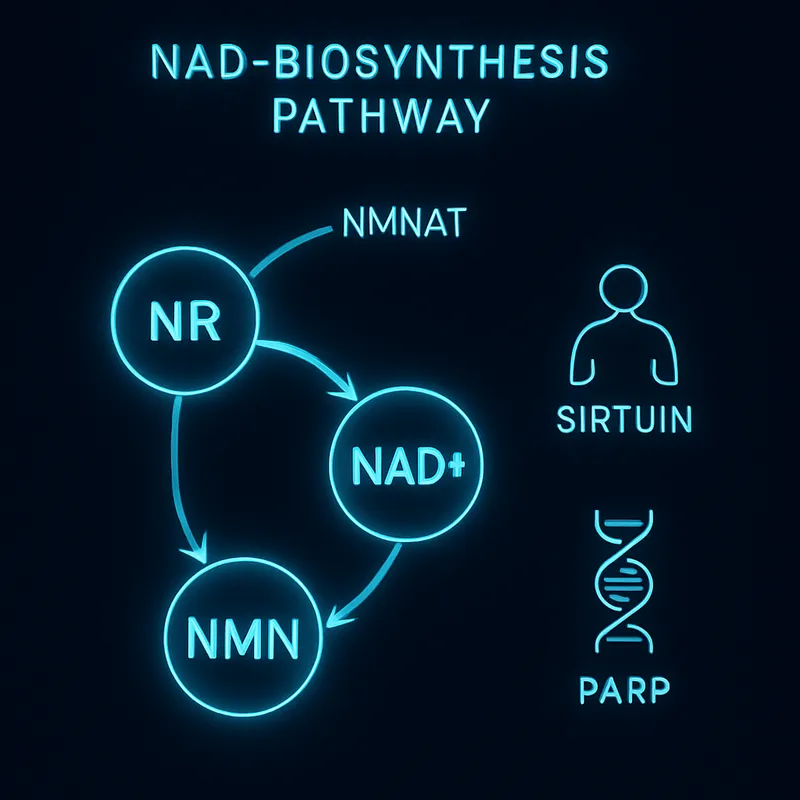
NAD+ (nicotinamide adenine dinucleotide) is a coenzyme present in every living cell, essential for mitochondrial energy production, DNA repair, and sirtuin activation. NAD+ levels decline approximately 50% between ages 40 and 60 (Massudi et al., 2012), driving interest in direct supplementation to restore youthful concentrations.
Research-context information only. NAD+ is a research peptide. Protocols, doses, and reactions reported below come from published research and self-reported community sources. This article reports what has been documented, not what should be done. Consult a licensed physician for personal medical decisions.
NAD+ is not FDA-approved as an anti-aging therapy. The protocols below reflect published research, clinical practice patterns, and community experience. This is not medical advice.
NAD+ Dosing Table
Match your vial size below — reconstitution and dose math update automatically.
| Dose | Syringe units | mL volume | Schedule |
|---|---|---|---|
| 50 mg | 50 units | 0.5 mL | 2-3x/week SubQStarter |
| 100 mg | 100 units | 1 mL | 2-3x/week SubQStandard |
| 200 mg | 200 units | 2 mL | 2x/week SubQAdvanced |
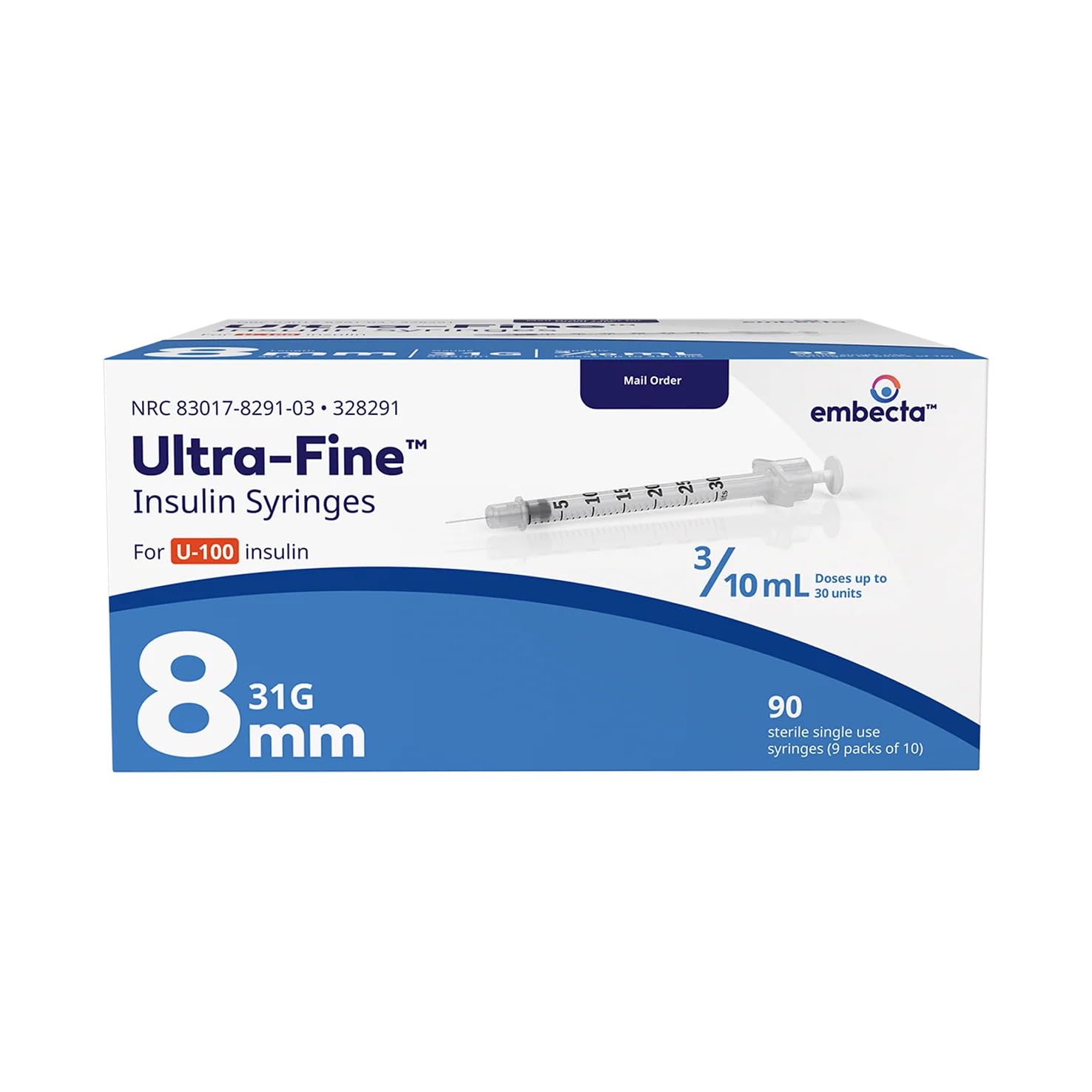
Math assumes U-100 insulin syringes (1 mL = 100 units). Verify your syringe matches before injecting. Round half-units to the nearest visible mark.
| Dose | Syringe units | mL volume | Schedule |
|---|---|---|---|
| 50 mg | 50 units | 0.5 mL | 2-3x/week SubQ |
| 100 mg | 100 units | 1 mL | 2-3x/week SubQ |
| 200 mg | 200 units | 2 mL | 2x/week SubQ |
Math assumes U-100 insulin syringes (1 mL = 100 units). Verify your syringe matches before injecting. Round half-units to the nearest visible mark.
| Dose | Syringe units | mL volume | Schedule |
|---|---|---|---|
| 50 mg | 50 units | 0.5 mL | 2-3x/week SubQ |
| 100 mg | 100 units | 1 mL | 2-3x/week SubQ |
Math assumes U-100 insulin syringes (1 mL = 100 units). Verify your syringe matches before injecting. Round half-units to the nearest visible mark.
| Dose | Syringe units | mL volume | Schedule |
|---|---|---|---|
| 50 mg | 50 units | 0.5 mL | 2-3x/week SubQStarter |
| 100 mg | 100 units | 1 mL | 2-3x/week SubQStandard |
Math assumes U-100 insulin syringes (1 mL = 100 units). Verify your syringe matches before injecting. Round half-units to the nearest visible mark.
| Dose | Syringe units | mL volume | Schedule |
|---|---|---|---|
| 50 mg | 50 units | 0.5 mL | 2-3x/week SubQ |
| 100 mg | 100 units | 1 mL | 2-3x/week SubQ |
| 200 mg | 200 units | 2 mL | 2x/week SubQ |
Math assumes U-100 insulin syringes (1 mL = 100 units). Verify your syringe matches before injecting. Round half-units to the nearest visible mark.
| Dose | Syringe units | mL volume | Schedule |
|---|---|---|---|
| 50 mg | 50 units | 0.5 mL | 2-3x/week SubQ |
| 100 mg | 100 units | 1 mL | 2-3x/week SubQ |
| 200 mg | 200 units | 2 mL | 2x/week SubQ |
Math assumes U-100 insulin syringes (1 mL = 100 units). Verify your syringe matches before injecting. Round half-units to the nearest visible mark.
Quick Reference: Standard Protocol
| Parameter | Detail |
|---|---|
| Vial | 500 mg |
| BAC Water | 5 mL |
| Concentration | 100 mg/mL |
| Dose | 100 mg (100 units on insulin syringe) |
| Route | Subcutaneous |
| Timing | AM |
| Frequency | 2-3 days per week |
| Cycle | As needed |
| Storage | Refrigerate, use within 28 days |
NAD+ Dosing by Route
NAD+ is unique among peptides in having five practical administration routes, each with different onset and bioavailability:
| Route | Dose Range | Frequency | Onset | Bioavailability |
|---|---|---|---|---|
| Subcutaneous injection | 100-200 mg | 2-3x per week | Days | High (direct) |
| IV infusion | 250-500 mg | 1-2x per month | Hours | Highest |
| Sublingual | 50-100 mg | Daily | 1-2 weeks | Moderate |
| Nasal spray | 25-50 mg | Daily | 1-2 weeks | Moderate |
| Oral NMN | 250-1000 mg | Daily | 2-4 weeks | Indirect |
| Oral NR | 300-1000 mg | Daily | 2-4 weeks | Indirect |
Cycling Details
NAD+ doesn't require strict cycling like most peptides. The "as needed" approach reflects that NAD+ is a coenzyme, not a receptor agonist — there's no desensitization concern in the same way.
Community protocols most commonly describe an 8-12 week injectable course (100-200 mg SC 2-3x/week), with oral NMN (500 mg daily) as a bridge during off periods before repeating.
Routes of Administration
Subcutaneous injection is the route community and clinical protocols most commonly use as the primary injectable route. Injection site stinging lasting 5-15 minutes is the most frequently reported side effect; community sources describe slow injection and site rotation as common approaches. Community sources most often describe morning timing, citing potential energizing effects.
IV infusion (250-500 mg over 2-4 hours) delivers the highest peak levels and is used in clinical settings. A single 3-hour infusion of 750 mg increased blood NAD+ approximately 398% above baseline (Grant et al., 2019). Loading protocols use 250-500 mg daily for 3-5 days.
Oral precursors (NMN/NR) are the most accessible route. NMN at 250 mg/day for 12 weeks significantly increased NAD+ metabolites and improved physical performance (Yoshino et al., 2021). NR at 1000 mg/day increased whole-blood NAD+ by ~60% over 6 weeks (Martens et al., 2018).
Buffered vs Unbuffered and Injection Comfort
The subcutaneous sting noted above tracks with the solution's pH. Reconstituted NAD+ is acidic, and subcutaneous tissue registers that as burning; buffered (pH-adjusted) NAD+ is reported to inject far more comfortably than plain acidic stock. The trade-off is comfort only — the dose and its effect are unchanged. Route matters here: IV infusions are diluted in saline and run over hours, so acidity is far less noticeable, while subcutaneous users feel it directly. The side-effects guide covers the sting, and buffered versus unbuffered forms, in more detail.
Reconstitution Quick Reference
| Vial Size | BAC Water | Concentration | 100 mg Dose | 200 mg Dose |
|---|---|---|---|---|
| 500 mg | 5 mL | 100 mg/mL | 100 units | 200 units (split) |
Math (as described in community reconstitution protocols): 500 mg ÷ 5 mL = 100 mg/mL. For a 100 mg dose: 100 ÷ 100 = 1.0 mL = 100 units on an insulin syringe.

Protocols describe refrigerating after mixing and using within 28 days. NAD+ is less stable in solution than many peptides, so prompt refrigeration matters. For step-by-step instructions, see the full NAD+ Reconstitution Guide.