BPC-157
A healing peptide for tendons, joints, gut issues, and injury recovery. BPC-157 (Body Protection Compound-157) is a synthetic peptide derived from a protein found in gastric juice. Studied extensively for tissue repair, wound healing, and anti-inflammatory effects. Popular in research for tendon, ligament, muscle, and gut healing applications.
Key Characteristics
- Length: 15 amino acids(Pentadecapeptide structure.)
- Origin: Gastric juice(Derived from human body protection compound.)
- Stability: High(Stable in gastric acid, can be taken orally or injected.)
- Primary Use: Tissue repair(Tendons, ligaments, muscles, gut healing.)
Overview
Core Benefits
Key AdvantagesThese are educational summaries of commonly discussed effects in wellness/regenerative contexts, not guarantees.
BPC-157 Results Timeline
ProgressionTimeline is illustrative and non-guaranteed. Outcomes vary and are commonly discussed alongside training, nutrition, sleep, and cycling practices.
How It WorksHealing Peptide — Gastric Pentadecapeptide
Target → Multi-Pathway Repair → Tissue Healing → Outcomes
Multiple: VEGFR2, PDGFR, Nitric Oxide System
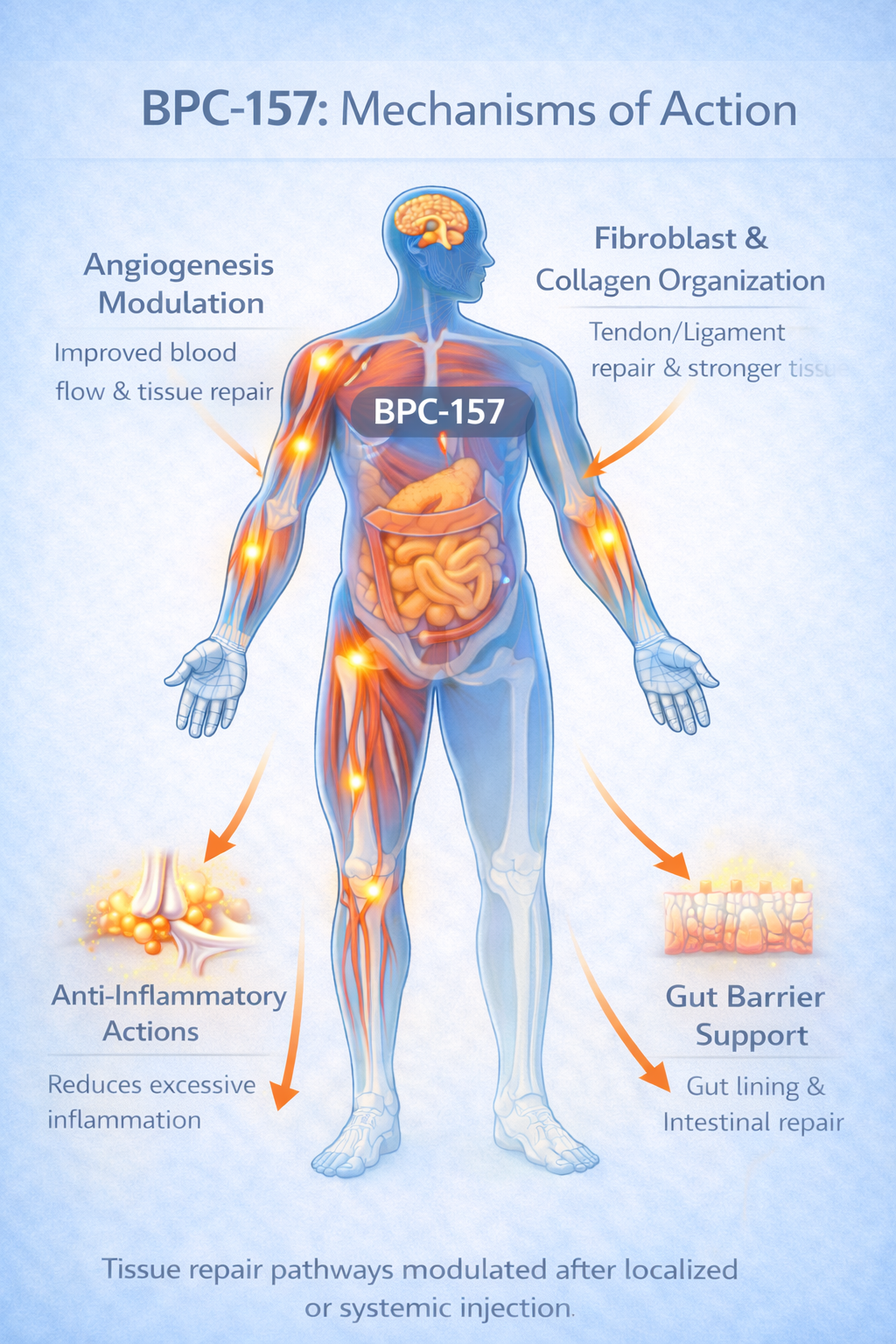
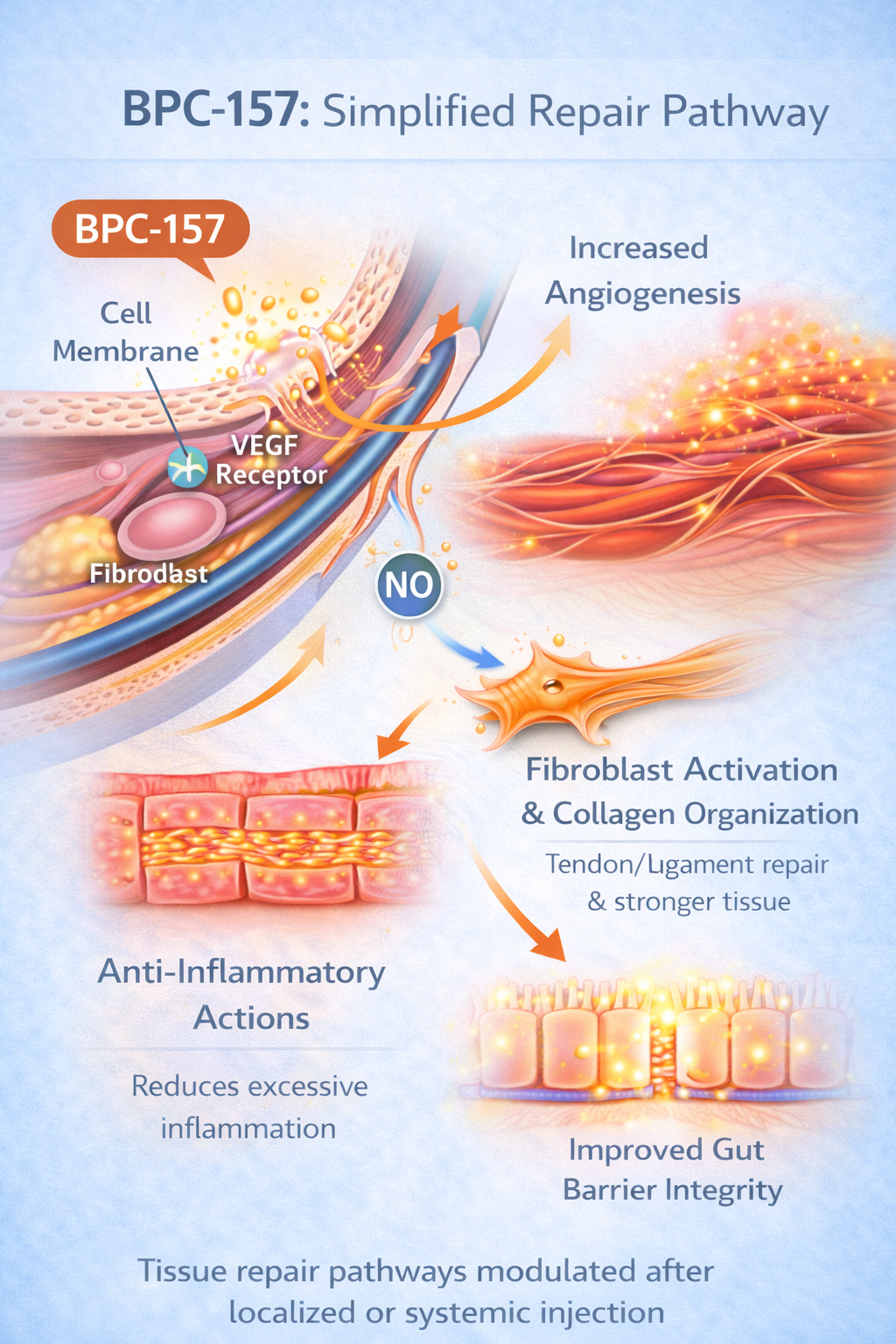
BPC-157 is derived from a protein in gastric juice and interacts with multiple signaling systems simultaneously — growth factor receptors (VEGF, PDGF), nitric oxide pathways, and the FAK-paxillin pathway involved in cell migration and tissue repair.
Angiogenesis + Cell Migration + Anti-Inflammatory
Upregulates VEGF (new blood vessel formation), activates growth factor receptor signaling for tissue repair, modulates nitric oxide for blood flow, and reduces inflammatory cytokines. This multi-pathway action is why BPC-157 affects so many tissue types.
Accelerated Tissue Repair Across Multiple Systems
Enhanced healing of tendons, ligaments, muscles, gut lining, and other tissues. Improved blood flow to injured areas via angiogenesis. Anti-inflammatory effects reduce swelling and pain at injury sites. Gut-protective effects support digestive health.
Reduced Pain → Faster Healing → Gut Comfort
Reduced pain and inflammation at injury sites within days to weeks. Accelerated healing timelines for injuries. Improved gut comfort (if GI issues present). Often stacked with TB-500 for comprehensive healing via complementary mechanisms.
What Makes This Peptide Different
BPC-157 is unique among healing peptides for its multi-system action — it affects tendons, ligaments, muscles, gut, and even brain tissue through multiple signaling pathways. While TB-500 works primarily through actin regulation and systemic distribution, BPC-157 works through growth factor upregulation and angiogenesis. This is why the two are commonly stacked — different mechanisms, complementary healing effects.
Top BPC-157 Vendors
Popular BPC-157 Stacks
Pre-made bundles ranked by value. Cost per mg is based on the BPC-157 portion of each stack.
BPC-157 + Thymosin Beta-4
Top BPC-157 + GHK-Cu + TB-500 Vendors
 EZ PeptidesCOA Verified
$88.00 for 70mg ($1.26/mg) · Score: 10/10
Top BPC-157 + GHK-Cu + TB-500 + KPV Vendors
EZ PeptidesCOA Verified$88.00 for 80mg ($1.10/mg) · Score: 10/10
Top Wolverine Stack (BPC-157 + TB-500) Vendors
EZ PeptidesCOA Verified$48.00 for 5mg/5mg ($9.60/mg) · Score: 10/10
Dosing ProtocolHealing / Tissue Repair
Educational reference only. Individual responses vary. Consult healthcare provider before use.
Why This Dosing Protocol
Why twice daily?BPC-157's relatively short half-life benefits from split dosing (AM/PM) to maintain more consistent tissue levels during the healing window.
Why stack with TB-500? BPC-157 (angiogenesis + growth factors) and TB-500 (actin regulation + systemic distribution) use different mechanisms. Together they provide comprehensive healing support.
Popular Stack Protocols3 stacks
Commonly paired protocols from the peptide research community. Educational reference only.
BPC-157 + TB-500
Healing / Injury RecoveryBPC-157 + TB-4 (Full-Length)
Healing / Tissue RepairBPC-157 + GHK-Cu
Healing / Skin / Tissue RepairDiagrams
Reconstitution Calculator
Dilution math and unit conversions. Prefilled using a common vial size for this peptide.
Open calculatorEducational Videos
How to Reconstitute BPC-157 Peptide and Calculate Dosage
Injecting BPC-157 for a shoulder injury
BPC-157 Benefits and Risks
What is BPC-157?
Handling
Educational overview on storage, labeling, and traceability considerations for lab environments. Consult primary literature and vendor documentation for specifics.
- Freezer (-20°C): 1+ year
- Refrigerator (2-8°C): 1-3 months
- Room temperature: 2-3 weeks (emergency only)
- MUST refrigerate at 2-8°C
- 4-week maximum shelf life
- NEVER freeze after reconstitution
- Use bacteriostatic water for multi-dose
Storage & Handling Guide
Learn proper storage temperatures, shelf life timelines, reconstitution best practices, and travel tips for lyophilized and reconstituted peptides.
FAQ
What is BPC-157 used for?
BPC-157 is studied primarily for tissue healing and repair. Research focuses on tendon, ligament, muscle, and gut healing. It's popular in sports medicine research for injury recovery and is often discussed for healing joints, reducing inflammation, and gut health support.
How does BPC-157 work?
BPC-157 appears to work through multiple mechanisms: promoting angiogenesis (new blood vessel formation), modulating growth factors, reducing inflammation, and protecting cells from oxidative stress. It may also influence nitric oxide pathways and help regulate the gut-brain axis.
Is BPC-157 often combined with other peptides?
Yes, BPC-157 is frequently discussed alongside TB-500 (Thymosin Beta-4) for synergistic healing effects. The combination is popular in research for comprehensive tissue repair, with BPC-157 focusing on localized healing and TB-500 on systemic tissue repair.
What is BPC-157?
BPC-157 (Body Protection Compound-157) is a synthetic peptide derived from a protein found in human gastric juice. It's a 15-amino acid sequence that has shown remarkable healing properties in research. "BPC" refers to its protective effects observed in gastrointestinal studies.
What is the typical BPC-157 dosage?
A common research dosage is 500 mcg per day (10 units on 1ml syringe), administered AM and/or PM. It can be injected subcutaneously near the injury site or systemically. Protocol: every day, 8 weeks on, 8 weeks off. Often stacked with TB-500 for synergy.
Can BPC-157 help with gut issues?
Yes, BPC-157 has shown promise for various gut conditions in research, including inflammatory bowel disease, ulcers, and leaky gut. It appears to protect and heal the gut lining, reduce inflammation, and support the gut-brain axis. This aligns with its origin in gastric juice.
How long does BPC-157 take to work?
Some users report improvements within days for minor issues, but significant healing typically takes 2-4 weeks. Chronic or severe injuries may require 4-8 weeks or longer. Consistency is important — healing is a gradual process that BPC-157 supports rather than instantly fixes.
What are the side effects of BPC-157?
BPC-157 is generally well-tolerated with minimal reported side effects. Some users experience mild nausea, dizziness, or headache. Injection site reactions may occur. Long-term safety data in humans is limited. There are theoretical concerns about effects on cancer growth, though not demonstrated in studies.
How long does reconstituted peptide last?
Once mixed with bacteriostatic water, peptides remain stable for up to 4 weeks when refrigerated at 2-8°C (36-46°F). Unopened powder can last 1+ year in the freezer. Get our complete Storage & Travel Guide.
Is this peptide legal to purchase?
Peptides sold "for research purposes only" are legal to purchase in the US, but are not FDA-approved for human use outside of specific medical applications. Always consult a healthcare provider before use.
New to peptides?
Take our Peptide Match tool to find the best peptide for your goals. You can also read our Complete Guide to Peptides to learn the basics.
BPC-157 Research Articles
Wolverine Stack Dosing: 500mcg/Day Protocol
BPC-157 finds the injury, TB-500 handles systemic repair — but timing matters. Full protocol with reconstitution, cycling, and split dosing.
guidesKlow Blend Dosing: 80mg 4-Peptide Protocol
4 peptides in one vial — but the math changes everything. Reconstitution, per-injection dosing, and why KPV makes this more than Glow.
guidesGlow Blend Dosing: 70mg 3-Peptide Protocol
3 repair peptides, one vial — but the fixed ratios matter. Reconstitution math, injection protocol, and when Glow beats Klow.
guidesThymosin Alpha-1 Dosing: 1.5mg 5on/2off Protocol
The 5on/2off schedule prevents desensitization most miss. Covers 1.5mg daily protocol, LL-37 stacking, and 8-week cycling.
Scientific Sources
The following peer-reviewed studies and official resources provide additional scientific context for this peptide:
Disclosure: we may earn affiliate commission from qualifying purchases. Educational information only — not medical advice.