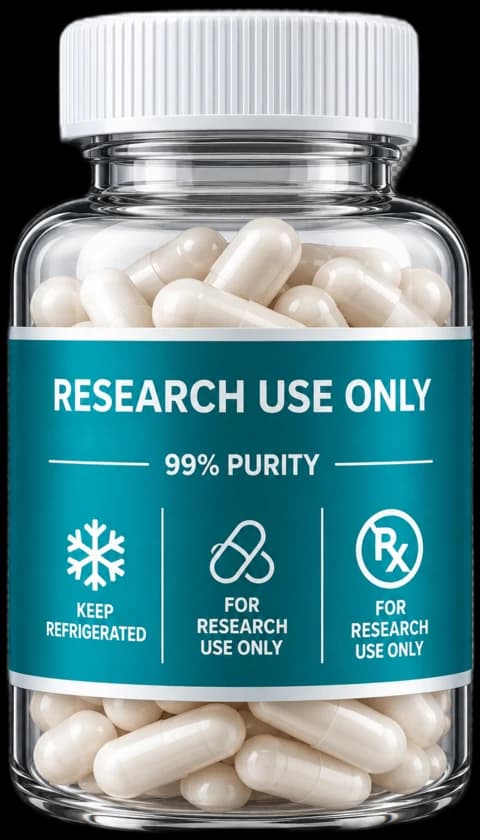
What is BPC-157 used for?
BPC-157 is studied primarily for tissue healing and repair. Research focuses on tendon, ligament, muscle, and gut healing. It's popular in sports medicine research for injury recovery and is often discussed for healing joints, reducing inflammation, and gut health support.
How does BPC-157 work?
BPC-157 appears to work through multiple mechanisms: promoting angiogenesis (new blood vessel formation), modulating growth factors, reducing inflammation, and protecting cells from oxidative stress. It may also influence nitric oxide pathways and help regulate the gut-brain axis.
Is BPC-157 often combined with other peptides?
Yes, BPC-157 is frequently discussed alongside TB-500 (Thymosin Beta-4) for synergistic healing effects. The combination is popular in research for comprehensive tissue repair, with BPC-157 focusing on localized healing and TB-500 on systemic tissue repair.
What is BPC-157?
BPC-157 (Body Protection Compound-157) is a synthetic peptide derived from a protein found in human gastric juice. It's a 15-amino acid sequence that has shown remarkable healing properties in research. "BPC" refers to its protective effects observed in gastrointestinal studies.
What is the typical BPC-157 dosage?
A common research dosage is 500 mcg per day (10 units on 1ml syringe), administered AM and/or PM. It can be injected subcutaneously near the injury site or systemically. Protocol: every day, 8 weeks on, 8 weeks off. Often stacked with TB-500 for synergy.
Can BPC-157 help with gut issues?
Yes, BPC-157 has shown promise for various gut conditions in research, including inflammatory bowel disease, ulcers, and leaky gut. It appears to protect and heal the gut lining, reduce inflammation, and support the gut-brain axis. This aligns with its origin in gastric juice.
How long does BPC-157 take to work?
Some users report improvements within days for minor issues, but significant healing typically takes 2-4 weeks. Chronic or severe injuries may require 4-8 weeks or longer. Consistency is important — healing is a gradual process that BPC-157 supports rather than instantly fixes.
What are the side effects of BPC-157?
BPC-157 is generally well-tolerated with minimal reported side effects. Some users experience mild nausea, dizziness, or headache. Injection site reactions may occur. Long-term safety data in humans is limited. There are theoretical concerns about effects on cancer growth, though not demonstrated in studies.
How long does reconstituted peptide last?
Once mixed with bacteriostatic water, peptides remain stable for up to 4 weeks when refrigerated at 2-8°C (36-46°F). Unopened powder can last 1+ year in the freezer. Get our complete Storage & Travel Guide.
Is this peptide legal to purchase?
Peptides sold "for research purposes only" are legal to purchase in the US, but are not FDA-approved for human use outside of specific medical applications. Always consult a healthcare provider before use.
New to peptides?
Take our Peptide Match tool to find the best peptide for your goals. You can also read our Complete Guide to Peptides to learn the basics.