
articlesMay 10, 2026·8 min read

Sports Medicine Names BPC-157, TB-500 Risks: What's Real

Peer-reviewed Sports Medicine paper flags BPC-157, TB-500, GHK-Cu — 40-75% of gray-market peptides fail purity. Where to source verified.

Dark navy editorial illustration of a peer-reviewed journal page over glowing peptide vials representing the Sports Medicine 2026 review of unapproved peptides

On April 12, 2026, the journal Sports Medicine published a peer-reviewed review by Christopher L. Mendias and colleagues titled "Safety and Efficacy of Approved and Unapproved Peptide Therapies for Musculoskeletal Injuries and Athletic Performance" (PMID 41966639). It is the first major academic review to formally name BPC-157, TB-500, GHK-Cu, and SS-31 as gray-market compounds with thin human safety data. In May 2026, Medscape's coverage of the review carried an even more specific number: an estimated 40 to 75 percent of gray-market peptides fail to meet basic safety standards. This is not a tabloid claim. It is an academic mainstream-medicine read on what the research-peptide market actually ships.

Research-context information only. Peptides discussed below are research compounds. Protocols, doses, and reactions reported come from published research and self-reported community sources. This article reports what has been documented, not what should be done. Consult a licensed physician for personal medical decisions.

Here is what the paper says, what the 40-75% number means, and how to source these peptides without ending up in the failing tier.

What the Sports Medicine Review Actually Documented

The Mendias review covers twelve peptides marketed direct to patients: AOD-9604, BPC-157, CJC-1295, follistatin-344, GHK-Cu, ipamorelin, MOTS-c, sermorelin, SS-31, tesamorelin, Tβ4, and TB-500. For each, the paper assesses pharmacological mechanism, animal-model evidence, available human safety data, and current regulatory status.

The central finding is structural, not sensational. Most of these peptides have plausible mechanisms and favorable signals in rodent and in-vitro work. What they don't have is sufficient human safety data to clear the bar that approved drugs clear. The paper's framing: a "parallel gray market" of unapproved peptides "operating largely outside of regulatory oversight" coexists with a small set of approved peptides (sermorelin, tesamorelin) that went through the standard process.

For BPC-157 specifically, the paper notes the Category 2 designation by the FDA's compounding advisory committee in 2023, the absence of human pharmacokinetic data despite roughly two decades of laboratory study, and the lack of a single completed phase 2 or phase 3 human trial for any of the indications it is marketed for. For TB-500 and Tβ4, similar gaps. For GHK-Cu, the paper cites human topical-cosmetic data as the strongest human evidence base — and notes that injectable use, the format the gray market actually ships, has effectively zero human trial coverage.

This is consistent with what we have written about BPC-157 dosing, TB-500 dosing, and GHK-Cu dosing. Strong animal data, real-world community reports of benefit, and a published evidence base that is mostly preclinical. The Sports Medicine review does not contradict any of that — it formalizes it in academic-journal language.

What Mendias Told Medscape: 40-75% Fail Basic Safety Standards

In Medscape's May 2026 follow-up, "Gray Market Peptides: So Much Hype, So Little Data," Mendias gave the practical-purity number. His estimate: 40 to 75 percent of gray-market peptides fail to meet two of the twelve safety standards a pharmacy-grade peptide drug would have to clear. The two he singled out: identity confirmation (is the molecule actually what the label says?) and contamination (residual solvents, endotoxin, heavy metals).

That range overlaps with what independent third-party testing has shown over the past two years:

  • Finnrick (~6,100 samples, 185 vendors, 15 peptides): roughly 40% of vendors fail their stated purity claim, with some samples testing as low as 75% actual peptide content and quantity diverging up to 46% from the labeled amount. We covered this in detail in 40% of Peptides Fail Purity Tests: How to Verify.
  • Janoshik Analytical (community-funded testing): 43% of submitted peptides in 2024 failed to meet label purity claims, with lower-tier vendors showing purities of 71-91% despite advertising 99%+. For retatrutide specifically, 23% of 2025 samples contained exendin-4 analogs rather than the labeled molecule.

The 40-75% range Mendias gave Medscape is broader than the single-figure Finnrick number because it captures both purity failures (the molecule is impure) and contamination failures (the molecule is right but the vial contains residual solvents, endotoxin, or trace heavy metals). Most public testing services only test for the first.

The practical read: across the gray market as a whole, somewhere between two-in-five and three-in-four vials would not pass the safety standards an approved pharmaceutical-grade peptide has to clear. Vendor selection determines whether you are in the failing tier or the verified tier.
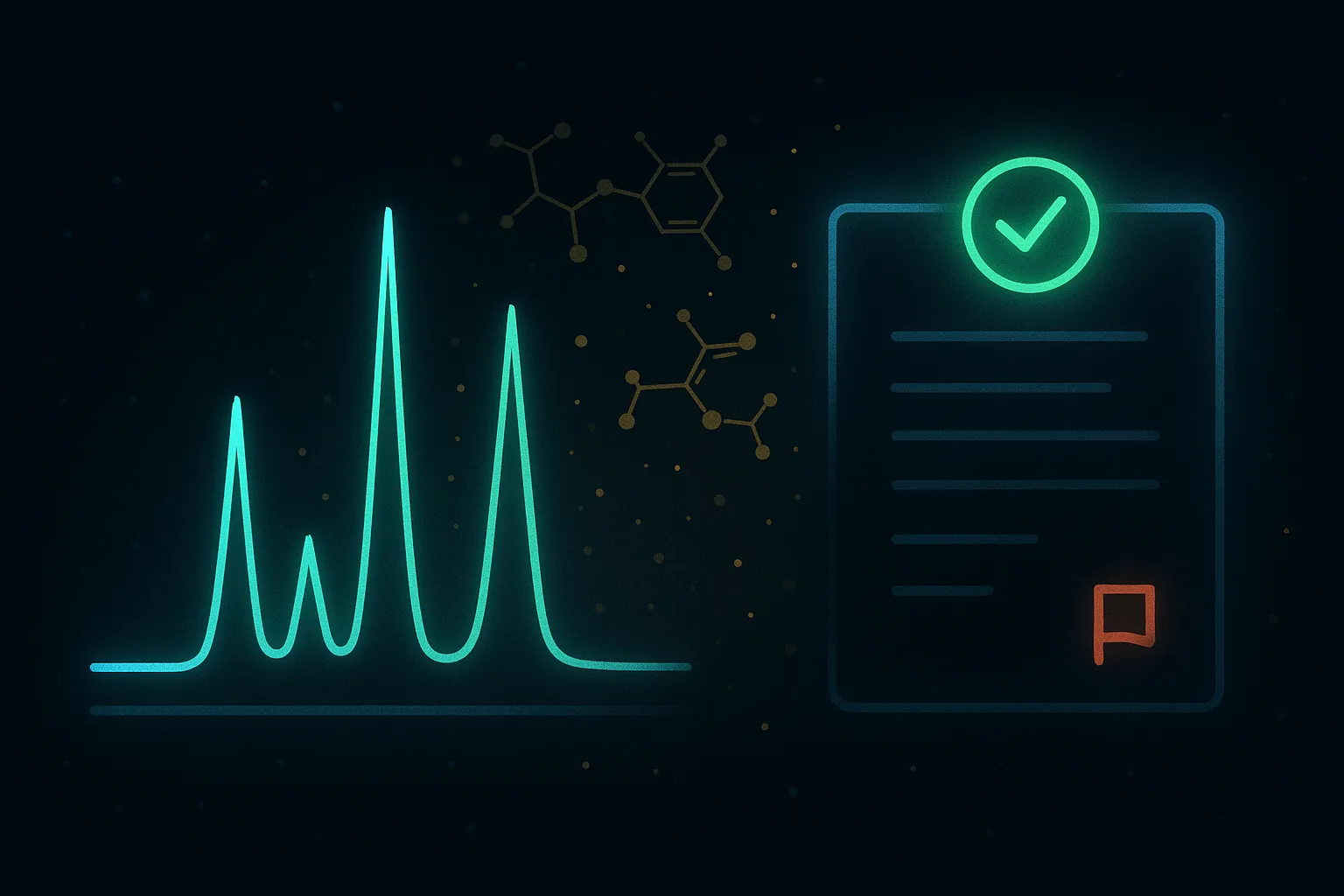
Editorial illustration of HPLC peptide purity chromatogram and COA document with red flag and green checkmark indicating verified vs failed batch

What This Means If You're Sourcing BPC-157, TB-500, or GHK-Cu Right Now

The Sports Medicine paper does not tell you to stop using these peptides. It tells you the human safety data is thin and the supply chain is unverified. Two things are within your control:

  1. Pick vendors that publish full Certificates of Analysis per batch. Not "third-party tested" as a line of marketing copy — actual COAs with HPLC purity, mass spec identity confirmation, and endotoxin (LAL) test results, with a lot number that matches the vial you receive. If the COA cannot be matched to your specific lot, treat it as marketing decoration.
  2. Check current vendor rankings before each order, not once per year. Vendor purity drifts. The vendor that ranked first six months ago may be sourcing from a different API supplier today. Our /best/bpc-157, /best/tb-500, and /best/ghk-cu pages refresh with current vendor offers, COA availability, and price-per-mg data.

Of the vendors we currently recommend, all five (Ascension Peptides, EZ Peptides, Ion Peptide, Glacier Aminos, Dynamic Peptide) publish per-batch HPLC purity data. Endotoxin testing coverage is more variable — Ascension and EZ publish it on most products, Ion and Glacier on a subset, Dynamic on a smaller subset. None of the five are immune to the broader market problem; vendor selection narrows your odds, it does not eliminate them.

Live offers, current pricing, and COA availability for each peptide flagged in the Sports Medicine review:
For the active deals on the recommended vendors mentioned above, see /deals — most are running discount codes that bring per-mg cost meaningfully under the gray-market median.

The Two-Question Verification Test Before Any Injection

The Mendias review is a peer-reviewed academic statement of a problem we have been writing about for over a year. The practical reader-level test reduces to two questions, asked of the specific vial in your hand:

  1. Identity: Does the vendor have an HPLC and mass-spec result for this lot number showing the labeled molecule at ≥98% purity? If yes, the molecule is likely what the label says. If no, you are guessing.
  2. Contamination: Does the vendor have an endotoxin (LAL) test result for this lot number showing acceptable bacterial contamination? If yes, the bacterial-contamination risk is low. If no, even a 99% pure peptide can put you in the hospital — that is what happened to the two women hospitalized at RAADFest in 2025 from peptide injections that almost certainly tested high on purity but had not been LAL-tested.

If the answer to both is yes, you are in the verified tier. If the answer to either is no — including "the vendor publishes general COAs but not for my specific lot" — you are in the gray-market median, where the 40-75% failure rate Mendias described actually lives.

The Sports Medicine review and the Medscape follow-up are not arguing peptides do not work. They are arguing that the supply chain for these compounds is not what most buyers assume, and that the human safety data behind them is thinner than the marketing suggests. Both are accurate. Neither changes the calculus of running a verified protocol with a verified vial — it just makes the verification step non-optional.

Editorial illustration of a research lab balance weighing a verified peptide vial against an unverified gray-market vial, dark navy aesthetic with gold accent

Why This Story Lands Now (And Why It Matters)

Three things converged in May 2026 that turned a months-old quality story into a fresh news cycle:

  • The Mendias review (April 12, 2026) gave the gray-market quality issue its first major peer-reviewed academic citation. Sports Medicine is a top-quartile journal in the orthopedics and sports-medicine field.
  • Medscape's coverage (May 2026) carried Mendias' Phoenix sports-medicine practice numbers — four to five patient peptide questions per day, BPC-157 most common — into mainstream physician readership. AMA, Scientific American, and STAT all picked it up within two weeks.
  • The FDA's July 2026 Pharmacy Compounding Advisory Committee meeting is reviewing whether to add several of the peptides Mendias' paper covers — including BPC-157 — to the 503A bulks list. The Sports Medicine review is now part of the formal record the committee will consider.

For buyers, the practical implication is the same regardless of how the July meeting goes: verified vendors with batch-level COAs are the supply you want. Unverified vendors with marketing-language quality claims are the supply Mendias was describing.

Frequently Asked Questions

What did the Sports Medicine paper actually say about BPC-157 and TB-500?
The April 12, 2026 review by Mendias et al. (Sports Medicine, PMID 41966639) covers AOD-9604, BPC-157, CJC-1295, FS-344, GHK-Cu, ipamorelin, MOTS-c, sermorelin, SS-31, tesamorelin, Tβ4, and TB-500. The paper's central point: animal-model data for these peptides shows favorable tissue repair signals, but rigorous human safety data is scarce and the gray market operates outside regulatory oversight. It does not declare these peptides unsafe — it documents how thin the human evidence is and how unverified the gray-market supply is.
Where does the 40-75% purity failure rate come from?
Christopher Mendias, PhD told Medscape in May 2026 that an estimated 40-75% of gray-market peptides fail to meet basic safety standards equivalent to two of the twelve required for pharmacy-grade peptides. Independent testing organizations like Finnrick have documented similar patterns — roughly 40% of vendors fail their stated purity claims, with some samples testing as low as 75% actual peptide content.
Are BPC-157 and TB-500 still legal to buy?
Both are sold in the research-chemical channel labeled 'not for human consumption.' Compounding pharmacies cannot make them under current FDA enforcement (BPC-157 was placed in Category 2 in 2023). Research-grade peptide vendors operate as a separate channel that the compounding rules do not regulate. The legal status of personal possession varies by state — most do not criminalize it, but enforcement has tightened on the supply side.
How do I know my BPC-157 or TB-500 is actually what the label says?
Three things to check before you inject anything: (1) batch-specific HPLC purity ≥98%, (2) mass spectrometry identity confirmation, (3) endotoxin (LAL) test result. If a vendor cannot produce a Certificate of Analysis with all three for your specific lot number, the vial is unverified. See [Peptide Purity Testing: How to Verify](/articles/peptide-purity-testing-how-to-verify) for the full COA reading guide.
Which vendors actually publish full COAs for BPC-157 and TB-500?
Of the recommended vendors — Ascension Peptides, EZ Peptides, Ion Peptide, Glacier Aminos, Dynamic Peptide — all publish HPLC purity data per batch on their product pages. Endotoxin and mass-spec data quality varies. See current vendor rankings at [/best/bpc-157](/best/bpc-157?from=sports-medicine-journal-flags-gray-market-peptides) and [/best/tb-500](/best/tb-500?from=sports-medicine-journal-flags-gray-market-peptides).
30ml bacteriostatic water vial — 0.9% benzyl alcohol multi-dose
Bac Water Made for Peptides
Don't risk a $300 peptide on generic bac water.
Most cloudy reconstitutions trace back to one thing — and it isn't the peptide. Sterile, non-pyrogenic, 0.9% benzyl alcohol — formulated for peptide reconstitution, not repackaged from generic stock.
0.9% benzyl alcohol Made for peptides 30 mL multi-dose
See why our bac water doesn't ruin peptides
30ml from $18.75 · Ships fast · Code thepeptidecatalog

References

  1. Mendias CL, et al. Safety and Efficacy of Approved and Unapproved Peptide Therapies for Musculoskeletal Injuries and Athletic Performance. Sports Medicine. April 12, 2026. PMID 41966639. DOI 10.1007/s40279-026-02437-0.
  2. Medscape. Gray Market Peptides: So Much Hype, So Little Data. May 2026. https://www.medscape.com/viewarticle/gray-market-peptides-so-much-hype-so-little-data-2026a1000dzg
  3. Medscape. As Unregulated Peptides Flood the Market, Clinicians Encouraged to Counsel Patients. May 2026. https://www.medscape.com/viewarticle/unregulated-peptides-flood-market-clinicians-encouraged-2026a1000e63
  4. American Medical Association. What doctors wish patients knew about injectable peptides. 2026. https://www.ama-assn.org/public-health/prevention-wellness/what-doctors-wish-patients-knew-about-injectable-peptides
  5. Scientific American. The science behind the peptide craze. 2026. https://www.scientificamerican.com/article/the-science-behind-the-peptide-craze/