|All Peptides

TB-500

Last reviewed: April 18, 2026 by The Peptide Catalog Team

A tissue repair peptide for flexibility, injury recovery, and systemic healing. TB-500 (Thymosin Beta-4 fragment) is a synthetic peptide that promotes tissue repair, cell migration, and angiogenesis. Researched for wound healing, flexibility, injury recovery, and reducing inflammation. Often discussed alongside BPC-157 for synergistic healing effects.

Overview

TB-500 Results Timeline

Progression
1
Week 1–2
Physical Changes
Initial inflammatory response modulation, early tissue repair signals
Performance & Recovery
May notice reduced discomfort at injury sites
Other Benefits
Improved gut comfort (if applicable), better sleep quality
2
Week 3–4
Physical Changes
Visible improvement in healing tissues, reduced swelling
Performance & Recovery
Increased mobility and flexibility in affected areas
Other Benefits
Enhanced recovery from workouts, improved overall well-being
3
Month 2–3
Physical Changes
Significant tissue repair progress, improved joint comfort
Performance & Recovery
Return to normal activity levels, reduced pain
Other Benefits
Systemic healing benefits, improved skin quality
4
3+ Months
Physical Changes
Near-complete healing of targeted tissues
Performance & Recovery
Full functional recovery in many cases
Other Benefits
Cumulative benefits build over multiple 8-week on/off cycles; many see best results with 2-3 cycles

Timeline is illustrative and non-guaranteed. Outcomes vary and are commonly discussed alongside training, nutrition, sleep, and cycling practices.

Read the full TB-500 results timeline →

Evidence at a glance

Two parallel grades per outcome — clinical RCT depth and real-world community adoption. See the Research Overview below for citations and detail.

OutcomeClinical EvidenceCommunity Evidence
Soft tissue repairModerateModerate
Cardiac repair after MIPreliminaryWeak
Wound healing and angiogenesisModerateModerate
Hair regrowthWeakWeak
How It WorksHealing Peptide — Thymosin Beta-4 Fragment

Target → Repair Signal → Tissue Healing → Outcomes

1
Target

G-Actin (Cytoskeletal Protein)

TB-500 is the active fragment of Thymosin Beta-4. It binds G-actin, a building block of the cell's structural framework. By regulating actin polymerization, TB-500 directly influences cell migration, blood vessel formation, and wound healing at the cellular level.

2
Cellular Signal

Actin Sequestration → Cell Migration + Repair

TB-500 sequesters G-actin monomers, promoting cell migration to injury sites and supporting new blood vessel growth. It also reduces inflammation through NF-kB pathway modulation and promotes stem cell maturation for tissue regeneration.

3
Systemic Effect

Widespread Tissue Repair + Anti-Inflammation

Unlike locally-acting peptides, TB-500 distributes systemically — injection site doesn't determine where healing occurs. It reduces inflammation body-wide, promotes tissue repair in muscles, tendons, ligaments, skin, and cardiac tissue.

4
What You Notice

Reduced Inflammation → Faster Healing → Flexibility

Reduced overall inflammation and stiffness within 1-2 weeks. Faster healing of injuries over weeks to months. Improved flexibility and range of motion. Often stacked with BPC-157 for complementary healing via different mechanisms.

What Makes This Peptide Different

TB-500's key advantage is systemic distribution— it doesn't matter where you inject it, the peptide travels throughout the body. This makes it ideal for multiple simultaneous injuries or general inflammation reduction. While BPC-157 works through growth factor pathways (best for targeted local healing), TB-500 works through actin regulation (best for systemic repair). The two use completely different mechanisms, which is why stacking them is so popular.

Research overview

Outcome-by-outcome look at what the evidence actually supports for TB-500, including human vs. animal study counts and our editorial take on each.

Soft tissue and tendon repair

Clinical:ModerateCommunity:Moderate

Thymosin beta-4 promotes cell migration and angiogenesis in multiple injury models. The synthetic 'TB-500' fragment is assumed to behave similarly but has less direct study.

0 human studies · 15 animal studies

Key findings & citations
  • Increases endothelial cell migration and tubule formation in vitro.
  • Speeds dermal wound closure by roughly 40% in rodent full-thickness models.
  • Tendon fibroblast migration enhanced at low micromolar concentrations.

Our take

Mechanistically credible. Most user reports describe weeks-to-months timelines for tendinopathies, not the day-scale claims you'll see on forums.

Cardiac repair after MI

Clinical:PreliminaryCommunity:Weak

Mouse infarct models show preserved ejection fraction and reduced scar after thymosin beta-4 administration. No human cardiac trial has finished.

0 human studies · 8 animal studies

Key findings & citations
  • Mouse LAD-ligation models show roughly 15% smaller infarct size vs. controls.
  • Hypothesized to reactivate epicardial progenitor cells.
  • TB4 was investigated as a regenerative cardiac therapy by RegeneRx — no completed Phase 3.

Our take

Interesting science, not a clinical option. Unrelated to typical user goals around tendon and joint repair.

Hair regrowth

Clinical:WeakCommunity:Weak

A single mouse study showed accelerated hair follicle re-entry into anagen after TB4 treatment. Human evidence is essentially absent.

0 human studies · 1 animal study

Key findings & citations
  • Mouse follicle anagen entry shortened vs. saline controls in one published model.
  • No controlled human study — anecdotal reports only.
  • Mechanism is plausible (stem-cell migration) but unproven for hair specifically.

Our take

Don't pick TB-500 for hair. Better-studied options exist (minoxidil, finasteride, GHK-Cu topically).

What TB-500 doesn't do

Claims that current evidence does not support. Worth knowing before you set expectations.

Top TB-500 Vendors

Dosing ProtocolHealing / Tissue Repair

Educational reference only. Individual responses vary. Consult healthcare provider before use.

Vial Size
10 mg
Reconstitution
2 ml BAC water
Dose
500 mcg (10 units on 1ml syringe)
Timing
AM
Frequency
Every day
Duration
8 weeks on, 8 weeks off
Protocol Notes
Systemic effects — injection site doesn't matter. Often stacked with BPC-157 for synergy.

Why This Dosing Protocol

Why daily dosing? TB-500 benefits from consistent daily dosing to saturate tissues throughout the 8-week cycle (8 weeks on, 8 weeks off). This maximizes the healing response.

Why injection site doesn't matter?TB-500's small molecular weight and actin-binding mechanism allow systemic distribution. Subcutaneous injection anywhere is sufficient — no need to inject near the injury.
Popular Stack Protocols1 stack

Commonly paired protocols from the peptide research community. Educational reference only.

BPC-157 + TB-500

Healing / Injury Recovery
Dose
500 mcg
Vial Size
10 mg
Reconstitution
2 ml BAC water
Dose
500 mcg
Vial Size
10 mg
Reconstitution
2 ml BAC water
Timing
AM (can split AM/PM)
Frequency
Daily
Duration
8 weeks on, 8 weeks off
The gold standard healing stack. BPC-157 drives local angiogenesis and growth factor upregulation while TB-500 provides systemic tissue repair via actin sequestration and cell migration. Complementary, non-overlapping mechanisms. BPC-157 can be injected near injury site; TB-500 works systemically regardless of injection site.
Popular TB-500 Stacks

Reconstitution Calculator

Dilution math and unit conversions. Prefilled using a common vial size for this peptide.

Open calculator

Storage & Handling

Storage at a glance

Proper storage temperatures, shelf life, reconstitution best practices, and travel tips for lyophilized and reconstituted peptides.

Powder: Freezer
1+ year at -20°C
Reconstituted: Fridge
4 weeks max at 2-8°C
View Complete Storage Guide

Handling specifics

Educational overview on storage, labeling, and traceability considerations for lab environments. Consult primary literature and vendor documentation for specifics.

Powder storage (very stable)
  • Freezer (-20°C): 1+ year
  • Refrigerator (2-8°C): 1-3 months
  • Room temperature: 2-3 weeks (emergency only)
Reconstituted storage (fragile)
  • MUST refrigerate at 2-8°C
  • 4-week maximum shelf life
  • NEVER freeze after reconstitution
  • Use bacteriostatic water for multi-dose
Molecular Structure

TB-500 sequence

Click any residue to see its properties.

HydrophobicPolarAcidic (−)Basic (+)Special

Sequence-derived properties

Length
7 residues
Molecular weight
847.0 Da
backbone only
Avg hydrophobicity
-1.77
Kyte–Doolittle scale

Residue classes

Hydrophobic: 1 (14%)Polar: 3 (43%)Acidic (−): 1 (14%)Basic (+): 2 (29%)

Net charge distribution

Positive2 (29%)
Neutral4 (57%)
Negative1 (14%)

Amino acid frequency

K×2T×2E×1L×1Q×1

Modifications

  • Synthetic fragment of thymosin beta-4 active site

Sequence and properties provided for educational reference. Not for clinical dosing decisions.

  • Length: 43 amino acids
    (Full Thymosin Beta-4 sequence.)
  • Origin: Thymus gland
    (Naturally produced in many cell types.)
  • Mechanism: Actin binding
    (Promotes cell migration and tissue repair.)
  • Primary Use: Systemic healing
    (Works throughout the body, not just locally.)
Active region
LKKTETQ (amino acids 17-23)
The LKKTETQ sequence (Leu-Lys-Lys-Thr-Glu-Thr-Gln) is the active actin-binding region responsible for TB-500's cell migration and healing properties.
Key takeaway: TB-500 promotes systemic tissue repair by enhancing cell migration, angiogenesis, and reducing inflammation. Often stacked with BPC-157 for comprehensive healing (TB-500 systemic, BPC-157 local). For maximum potency, consider Thymosin Beta-4 — the full-length version of this peptide.

FAQ

What is TB-500 and how does it differ from BPC-157?

TB-500 is a synthetic fragment of Thymosin Beta-4, a naturally occurring peptide involved in tissue repair. While both promote healing, TB-500 works more systemically (throughout the body) and focuses on cell migration and blood vessel formation, while BPC-157 tends to work more locally at injury sites.

What is TB-500 researched for?

TB-500 is studied for wound healing, tissue repair, flexibility, reducing inflammation, and promoting hair growth. It's popular in research for muscle injuries, tendon repair, and overall recovery from tissue damage.

What's the difference between TB-500 and Thymosin Beta-4?

TB-500 is a synthetic fragment designed to mimic the active region of the full-length Thymosin Beta-4 (TB-4) peptide. TB-4 is the complete 43-amino acid peptide with full biological activity across multiple pathways, while TB-500 is a simplified, more affordable version. TB-4 is considered more potent but costs more.

How does TB-500 work?

TB-500 promotes healing through several mechanisms: upregulating actin (a protein crucial for cell structure and movement), promoting cell migration to injury sites, stimulating angiogenesis (new blood vessel formation), and reducing inflammation. It helps cells move to where they're needed for repair.

What is the typical TB-500 dosage?

A common research dosage is 500 mcg per injection (10 units on 1ml syringe) administered every day in the AM. Protocol: 8 weeks on, 8 weeks off. Injection site doesn't matter as TB-500 has systemic effects throughout the body.

Can TB-500 help with flexibility?

Yes, TB-500 is noted for potentially improving flexibility and reducing muscle stiffness. This may be due to its effects on tissue remodeling and reducing adhesions. Many users report improved range of motion and reduced muscle tightness, especially when recovering from injuries.

Is TB-500 good for hair growth?

Research suggests TB-500 may promote hair growth by stimulating hair follicle stem cells and improving blood flow to the scalp. Some users report thicker, faster-growing hair. It's sometimes combined with other hair-supporting peptides like GHK-Cu for enhanced effects.

What are the side effects of TB-500?

TB-500 is generally well-tolerated. Possible side effects include temporary lethargy, head rush, and injection site reactions. Some report mild flu-like symptoms initially. Like most healing peptides, there are theoretical concerns about promoting growth in existing tumors, though not demonstrated in research.

How long does reconstituted peptide last?

Once mixed with bacteriostatic water, peptides remain stable for up to 4 weeks when refrigerated at 2-8°C (36-46°F). Unopened powder can last 1+ year in the freezer. Get our complete Storage & Travel Guide.

Is this peptide legal to purchase?

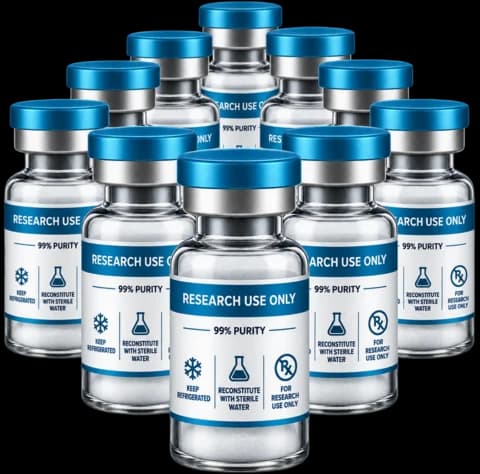
Peptides sold "for research purposes only" are legal to purchase in the US, but are not FDA-approved for human use outside of specific medical applications. Always consult a healthcare provider before use.

New to peptides?

Take our Peptide Match tool to find the best peptide for your goals. You can also read our Complete Guide to Peptides to learn the basics.

Scientific Sources

The following peer-reviewed studies and official resources provide additional scientific context for this peptide:

TB-500 Research Articles

Compare TB-500 to alternatives

Side-by-side mechanism, dose, half-life, and vendor pricing.

Open compare →

Disclosure: we may earn affiliate commission from qualifying purchases. Educational information only — not medical advice.